
Professional Interventionist vs. Doing It Alone
You have already tried talking. Pleas at the kitchen table failed. Midnight drives across town changed nothing. Still, the addiction keeps its grip. So one hard question stands before you. Families weigh it honestly: professional interventionist vs doing it alone. Love argues for handling it yourselves. Experience, however, argues for guided help. Neither answer shames a loving family.
What Doing It Alone Usually Looks Like
First, everyone gathers with good intentions. Also, everyone arrives exhausted and frightened. Then voices rise within ten minutes. Old hurts rush into the room. Fear makes honest words come out sharp. Soon, the meeting becomes an argument. Your loved one feels cornered and attacked. Consequently, they defend the addiction fiercely. Promises come out shaky and vague. Bottom lines dissolve before dinner ends. Within days, the old pattern returns. Nothing about love caused that failure. Rather, addiction outmaneuvers unprepared families easily.
What a Professional Changes
First, a professional prepares everyone beforehand. Families write, read, and rehearse letters. Also, treatment options stand ready that day. A treatment bed waits, already arranged. Then the meeting follows a calm structure. Each person speaks truth with love. Also, the family delivers one united message. Indeed, unity gives the words real weight. Jim calls this work exposure and connecting. Slowly, denial loses its hiding places. Then the aha moment often arrives. “I don’t have to live like this anymore.” Jim calls that shift surrender to win. Afterward, your loved one chooses treatment willingly.
What the Numbers Actually Say
The Association of Intervention Specialists publishes careful outcome figures. Its published range deserves a careful read. Between 80 and 90 percent of participants enter treatment. That entry figure covers roughly six months. Also, it assumes families held their bottom lines. These figures frame professional interventionist vs doing it alone honestly. Honestly, treatment entry is not lasting recovery. Treatment entry simply opens the door. Recovery grows through daily work afterward. Also, these figures belong to the association. They are not Jim’s personal rate. Jim never promises a family any outcome. Still, preparation clearly improves the odds. Therefore, guided help deserves serious consideration.
Why Jim Answers the Phone Himself
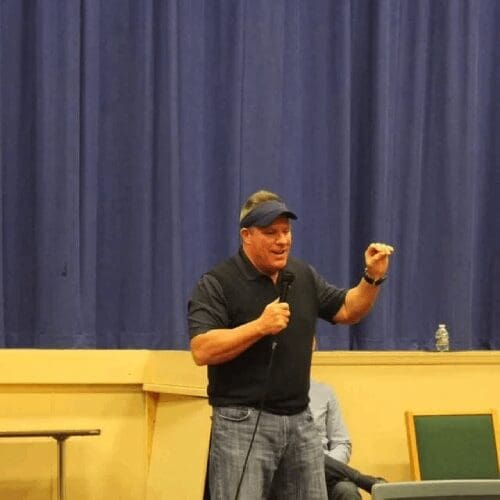
Jim Reidy leads Intervention 365 personally. He holds CIP #10266 proudly. The Pennsylvania Certification Board issued that credential. Also, Jim joined the Association of Intervention Specialists in 2018. A&E featured Jim on Intervention, Season 20. Psychology Today lists his profile as Verified. His record spans 15+ years now. Overall, Jim has led 750+ interventions. Also, Jim knows addiction from the inside. His own recovery steadies every room. Most importantly, Jim answers his own phone. He answers it personally, around the clock. Families across the East Coast call him. Also, Jim travels nationally when needed.
Questions Families Ask Us
Can our family run an intervention alone?
Yes, families sometimes succeed without help. However, preparation usually decides the outcome. Unprepared meetings often harden denial instead. Jim can explain the differences honestly.
How fast can a professional help us?
Often, planning starts the same day. Jim first listens to your whole story. Then he builds the plan with you. So professional interventionist vs doing it alone also comes down to timing.
What if our loved one says no?
Refusal happens, and planning covers it. Families hold loving bottom lines together afterward. Many loved ones accept help days later. Still, nobody faces that week alone.
If Someone Is in Danger Right Now
Call 911 first for immediate danger. Also, know the free lifelines below. SAMHSA is the Substance Abuse and Mental Health Services Administration. Its National Helpline offers free, confidential treatment referral. That number is 1-800-662-4357, always open. For a mental health crisis, call or text 988. Specifically, 988 reaches the Suicide and Crisis Lifeline. For poisoning, call Poison Control at 1-800-222-1222.
Finally, whatever you decide about professional interventionist vs doing it alone, start with one honest call. Call Intervention 365 at (888) 972-8513. You can also reach Jim at (267) 970-7623. Jim answers himself, day or night. Then real help can finally begin.